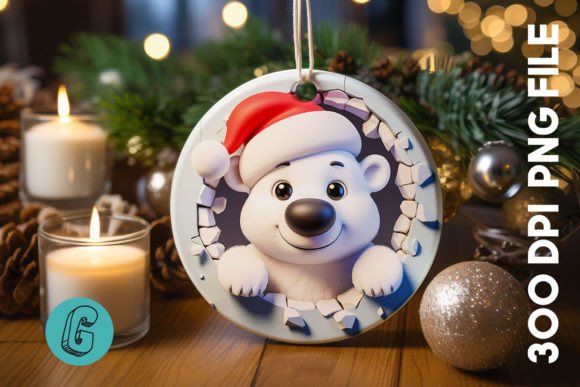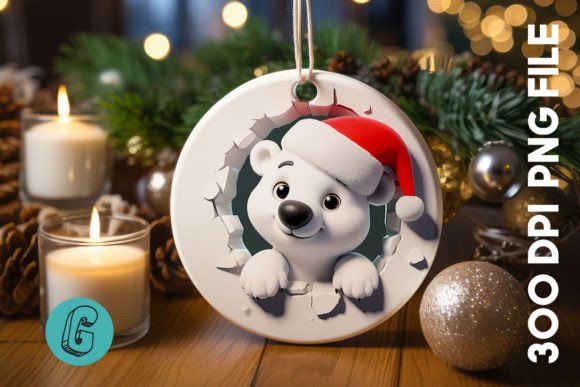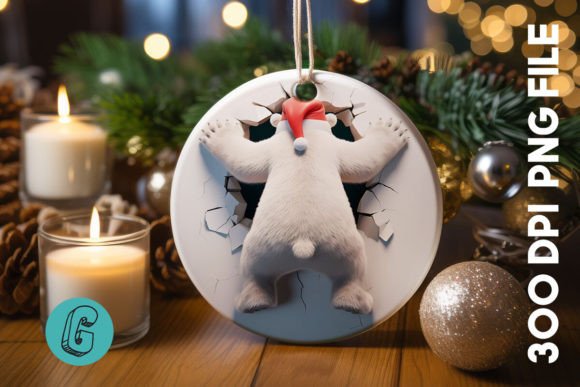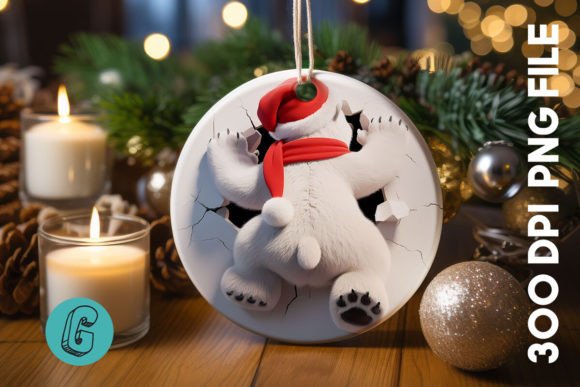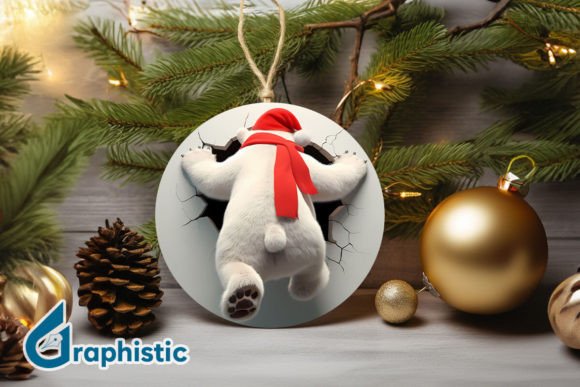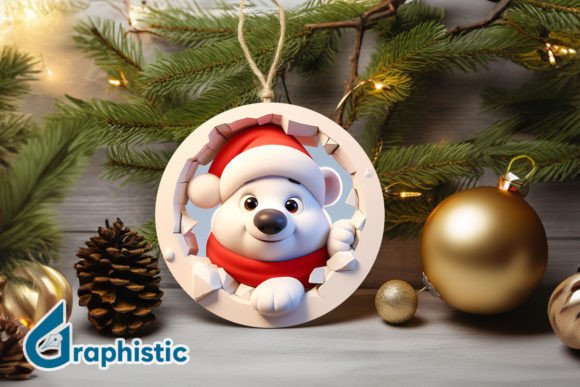
3D Polar Bear Christmas Ornament F 120
When I first opened the file for 3D Polar Bear Christmas Ornament F 120, my immediate thought wasn't about the technical stitch count or the specific file format. Instead, I was struck by the mood it instantly conjures. There is a distinct charm to this design that feels less like a generic holiday clipart and more like a cozy memory waiting to be stitched. As someone who spends hours evaluating digital assets for real-world applications, from high-volume boutique orders to one-of-a-kind personalized gifts, I look for designs that carry weight. This piece does exactly that.
The visual personality of the bear is rounded and inviting, perfectly capturing the essence of a winter wonderland without being overly cluttered. It sits comfortably in the Illustrations category but transcends simple graphics because of its implied depth. The layout suggests a three-dimensional quality that relies heavily on how the machine will render the satin stitches and fill areas. When you are designing for a client or planning your next Etsy listing, that "wow" factor upon completion is what drives sales, and this design has the potential to deliver it.
Real-World Application: From Screen to Stitch
I recently put this design through a practical test scenario involving a custom tote bag project for a local holiday market. The goal was to create a unique accessory that stood out on a crowded table filled with mass-produced goods. I chose a sturdy canvas fabric for the tote, knowing that the density of the embroidery needed to hold up against daily use. The 3D Polar Bear Christmas Ornament F 120 performed admirably here. The contrast between the white fur texture and the festive background elements created a focal point that drew customers in immediately.
However, the true test of any machine embroidery design is how it translates across different mediums. Imagine taking this same asset and placing it on a soft fleece sweatshirt for a family matching set. The plush texture of the fabric would enhance the "fuzzy" look of the polar bear, making the finished product feel incredibly tactile and premium. For baby items, such as a onesie or a blanket, the gentle curves of the bear offer a sense of safety and warmth that parents love. It transforms a standard garment into a cherished keepsake.
I also considered using this design for kitchen towels and aprons. In a home setting, a well-executed embroidered patch featuring a winter theme adds a touch of rustic elegance. The design works particularly well when paired with complementary text, turning a simple utility item into a conversation starter. Whether you are an Etsy seller looking to boost your shop's holiday collection or a craft fair vendor needing a standout product, this design offers versatility that can elevate your brand consistency.
Navigating Technical Challenges and Fabric Choices
While the artistic vision is strong, every designer knows that execution is everything. There are specific scenarios where 3D Polar Bear Christmas Ornament F 120 requires careful consideration. If you plan to use this on small hoop sizes, you must verify that the fine details remain legible. Tiny features can sometimes get lost in the stitching process if the design is scaled down too aggressively. Similarly, textured fabrics like bouclé or heavy corduroy can hide the definition of the stitches, potentially muddying the intended effect.
Stretchy fabrics present another challenge. While this design looks great on stable materials like cotton twill or denim, applying it to highly elastic knits without proper stabilization can lead to distortion. The curvature of caps and hats also demands attention. Placing a dense design on a curved surface requires precise digitizing adjustments to ensure the bear doesn't appear stretched or warped. If you are working with dark fabric, the thread color selection becomes critical. You need to ensure there is enough contrast so the white and light tones of the bear pop against the background, otherwise, the "3D" illusion might fall flat.
Dense stitch areas are common in designs meant to look three-dimensional. If the stitch density is too high, the fabric may pucker, especially on thin materials like tea towels or lightweight shirts. This is where the choice of stabilizer plays a pivotal role. A tear-away or cut-away backing can make the difference between a professional finish and a wrinkled mess. Always test your design on scrap fabric first to gauge how the threads interact with your specific material.
Elevating Product Value and Customer Trust
In the world of handmade commerce, the perceived value of your product often hinges on the quality of the details. A well-stitched 3D Polar Bear Christmas Ornament F 120 signals to the buyer that care and precision went into the creation. It builds trust. When a customer receives a gift or purchases a boutique item, they want to know it was made with intention. This design supports that narrative beautifully.
The clarity of the stitching affects how the final product is received. If the satin stitches are crisp and the fill stitches are even, the design commands a higher price point. Conversely, loose threads or uneven density can undermine the effort, regardless of how cute the subject matter is. By ensuring your machine settings and thread choices align with the design's requirements, you protect your reputation as a creator. This is especially important for commercial embroidery projects where consistency across multiple units is key.
For digital product sellers, this design serves as a powerful asset for printable mockups. High-quality previews of the finished embroidery help buyers visualize the end result, increasing conversion rates. When used correctly, it bridges the gap between a digital file and a tangible, emotional connection. It allows you to showcase your skills not just as a digitizer, but as a complete service provider capable of delivering beautiful finished products.
Essential Designer Notes for Success
To get the most out of this file, I recommend a few practical steps before committing to a full production run. First, always review the stitch density. If the design feels too heavy for your chosen fabric, you may need to adjust the underlay or reduce the density slightly. Second, check the thread colors. Experiment with different shades to see which combination brings out the best in the bear's expression.
Confirming the hoop size is vital. Ensure your embroidery machine can accommodate the design dimensions without cutting off essential details. If you are unsure about the exact specifications, check the file documentation or contact the creator for clarification. Testing the design in black and white mockups can also reveal contrast issues that might not be obvious in color. Finally, verify the licensing terms. If you intend to sell finished items, confirm that your license covers commercial use. If you are selling the digital file itself, ensure you have the right to redistribute it.
By approaching 3D Polar Bear Christmas Ornament F 120 with these practical considerations in mind, you transform a simple download into a successful business asset. Whether you are creating personalized gifts, expanding your craft business, or decorating apparel for a special occasion, this design offers a solid foundation for creativity. It is a reminder that good embroidery is not just about following instructions; it is about understanding the interplay between art, technology, and the human touch.